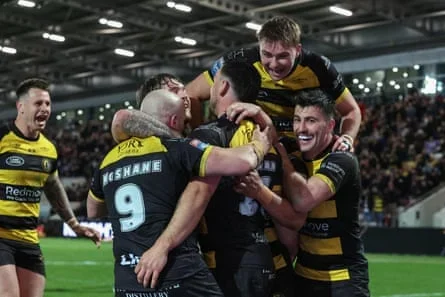

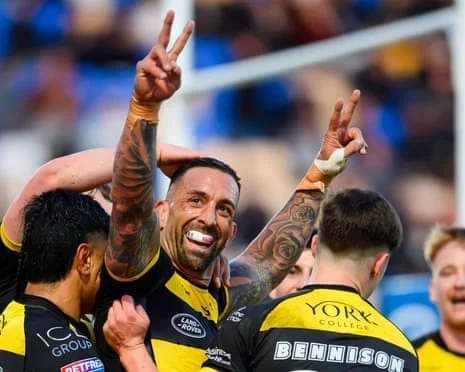
Paul Vaughan celebrates with his York Knights teammates after scoring a try against Toulouse. (Photograph: Allan McKenzie/Shutterstock)
The Rugby Football League is set for another round of talks with the NRL on 15 May, and the decision on whether Super League stays at 14 clubs or expands further to include the London Broncos is coming soon. The Broncos could squeeze into a 14-team league through IMG gradings, but that would push any club ranked below them down to the Championship, potentially putting newly promoted York or Toulouse in serious and unnecessary risk. That would be unwise given the unique markets these clubs represent.
The three teams promoted to the expanded Super League this season have exceeded expectations. Each has won three games, defeating champions Hull KR, Hull FC, Catalans, and Wakefield along the way. They also gave Wigan, Leigh, and St Helens major scares. After 10 rounds, none of them sit in the bottom two spots.
Along with strong starts, the newcomers bring diversity. Investors, whether from the NRL or elsewhere, want variety and attractive destinations in the league, so all three should remain.
Bradford Bulls are in the heart of the sport, drawing five-figure crowds at an improving Odsal Stadium, and they are a brand recognized beyond the game. Toulouse Olympique doubles the European presence that finally helped secure a French TV deal; the city, like London, is a huge market for new investors. Having a few smaller clubs in the league appeals to the NRL as long as they bring something special and have the potential and financial strength to transform, as Leigh, Hull KR, and Wakefield have done. Castleford is struggling but backed by hardcore community support and a determined new owner spending millions. Huddersfield has heritage and a spectacular stadium, though low attendance makes the Giants want to leave.
York brings a different dynamic. The city is booming, with 10 million visitors annually generating £2 billion in tourism. Despite a skeleton staff, the Knights engage with corporate giants. Hospitality suites line the main stand: KPMG sponsored a match against Toulouse, and their shirts are backed by Land Rover, a distillery, and a university. The club’s economic potential is huge given the city’s wealthy population. No wonder the RFU wants a Premiership team in North Yorkshire. The city known for its churches, architecture, pubs, and chocolate now features on Sky Sports for rugby league.
Turning local wealth into sporting success is challenging. As Cambridge and Oxford football clubs show, playing a working-class sport in a world-famous tourist city is not easy. Few of York’s visitors come for rugby league, but late on a Friday night, pubs along medieval streets are dotted with fans. When I visited, the hotel breakfast room was filled with red and green Leigh shirts on Saturday morning. The Knights bring positivity and considerable money to the city.
Whether the NRL invests or not, the way Super League games look on TV and feel in the grounds will be more important than a few thousand extra ticket sales. Just as the city is unique, so is York’s stadium. The Knights share the ground with two successful clubs – York Valkyrie, the women’s team, and York City Knights, the men’s side.